Cost to Install Recessed Lighting
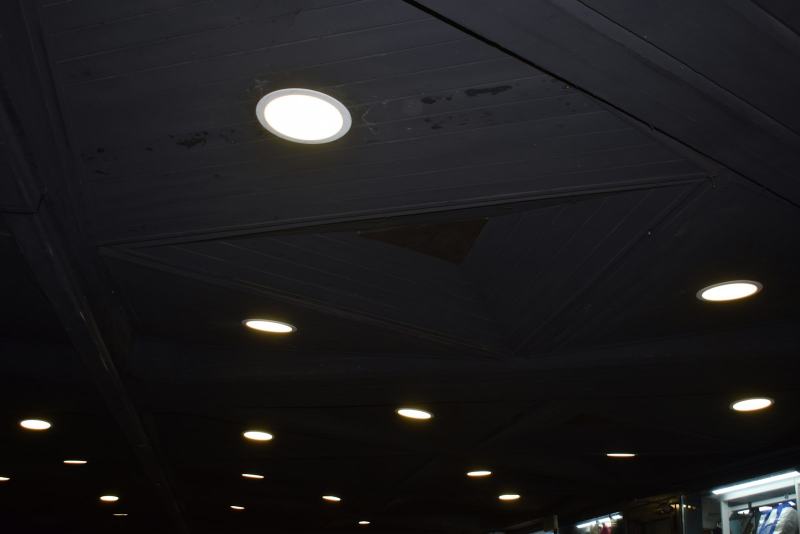
It costs $150 to $450 per can to install recessed lighting. A slim LED retrofit in a ceiling with attic access costs $150 to $250 each. A can in a finished ceiling with insulation and a new switch costs $300 to $450. A typical room of six lights runs $900 to $2,700 in all.
Recessed lights give a clean, modern look and spread light evenly. They are also one of the more labor-heavy lighting upgrades, because every fixture needs a hole, a wire run, and a connection. This guide explains the cost by type, how many cans you need, and how to avoid common mistakes.
What It Costs to Install Recessed Lighting
Most homeowners pay $200 to $350 per light. That covers the fixture, the cable, the cut, and the labor. A larger job lowers the per-light price because the electrician sets up once.
A small order of one or two lights costs more per unit. Many electricians have a minimum charge of $150 to $300 for the visit.
The table below shows typical ranges. The sections after it explain what drives the cost.
Retrofit vs. New Construction Cans
A retrofit, or remodel, light fits into a finished ceiling. The electrician cuts a hole in the drywall and clips the fixture into it. Most are slim LED units with a built-in driver. They are thin enough to work between joists.
A new-construction can is installed before the drywall goes up. It is a housing that mounts to the joists. It costs less in labor but only works when the ceiling is open.
For most existing homes, retrofit slim LEDs are the right choice. They cost $15 to $60 each for the part, run cool, and last 25,000 hours or more.
How Many Lights Do You Need?
A common rule is one light for every 4 to 6 square feet of ceiling. A 12 by 12 foot room, at 144 square feet, needs about six lights. A kitchen with task areas may need more.
Spacing matters more than the count. Lights set 4 to 6 feet apart and about 3 feet from a wall give even coverage. Too few lights make dark spots. Too many make the room look like a runway.
Choose a color temperature of 2700K to 3000K for living spaces. A cooler 4000K suits kitchens and offices. A dimmer switch gives you control and costs $20 to $60 installed.
What Changes the Price
Attic access is the top factor. If the electrician can work from above, the wires run easily. A finished room above, or a vaulted ceiling, means fishing wire through joists and costs more.
Insulation matters. Lights rated IC can touch insulation. Non-IC cans need clearance and cost more to install safely. Most modern LED retrofits are IC-rated.
The wiring also counts. If the room has no switch loop, or the existing circuit is full, you may need a new run. For a full circuit, see our guide to adding a dedicated circuit.
Where the Money Goes
The fixture is $15 to $60 for a retrofit LED. Cable, connectors, and a switch add $30 to $100 for a room. A dimmer is $20 to $60.
Electrician labor is $75 to $150 per hour, and each can takes 30 to 60 minutes. Drywall patching, if a hole is misplaced, adds $75 to $250.
A permit is often needed for new wiring, at $30 to $150. Insulation baffles or covers in an attic add $10 to $30 per fixture.
DIY or Hire an Electrician?
Swapping an old light for a retrofit is a DIY job for many. Adding new lights means cutting holes and running wire, which is harder. A mistake can leave a hole in the ceiling or a live wire.
Hire a licensed electrician for new circuits, switch work, or any ceiling you cannot access. An electrician also confirms that the circuit can carry the added load.
Plan Lighting With Other Work
New lights go well with other electrical updates. If you plan to move an outlet, do both in the same visit. A ceiling fan in the same room can share the wiring.
For a kitchen, plan lighting with a new backsplash and new countertops. Lighting that fits the layout avoids shadows on the counter.
LEDs draw little power, but a big addition can still stress an old panel. See our guide to replacing an electrical panel if your breakers trip often.
How to Keep the Cost Down
Install all the lights in one visit. The setup time is the same for one light or ten. Choose retrofit slim LEDs, which cost less than traditional cans and need no bulbs.
Ask for a per-light price and the minimum charge. Compare two quotes on the same layout. Do not let the electrician choose the number of lights without a plan.
The Department of Energy LED guide explains how LEDs save energy. A good LED retrofit lowers your power bill every month.
Choosing Color and Brightness
Brightness is measured in lumens. A typical living room light needs 600 to 800 lumens per fixture for general light. A kitchen needs more, and a hallway needs less.
Color temperature sets the mood. Warm light at 2700K feels cozy and suits bedrooms. Neutral light at 3500K to 4000K feels crisp and suits kitchens and offices. Many LEDs now let you switch between colors.
Check the color rendering index, or CRI. A rating of 90 or higher makes food, skin, and fabric look natural. A low CRI can make a room look dull, even if it is bright.
Trim Styles and Housing Types
The trim is the visible ring around the light. A baffle trim cuts glare and suits most rooms. A reflector trim gives a brighter, wider beam. An eyeball trim can aim the light at a wall or a picture.
Gimbal trims tilt to highlight art or a stone wall. Wet-rated trims suit showers and covered porches. Choose the trim before you buy, since it affects the look and the cost.
Smaller lights, at three or four inches, give a clean modern look. Larger six-inch lights cover more area and cost a bit less per lumen. Match the size to the height of the ceiling.
Dimmers and Smart Controls
A dimmer is a small cost with a big payoff. It lets you set the mood and lowers energy use. Pick a dimmer rated for LED, or the lights may flicker or buzz.
Smart switches let you control the lights by phone or voice. They cost $30 to $80 each and need a neutral wire in the box. An electrician can tell you if your box has one.
Plan the switch layout before the work begins. Group the lights into zones, such as a task zone and a mood zone. That gives you more control for the same number of fixtures.
Safety and Code Basics
Recessed lights in an insulated ceiling must be IC-rated. A light that is not rated for contact can overheat and start a fire. Check the label before you buy.
Lights in a damp spot need a wet or damp rating. Lights near a shower must be wet-rated. A permit and an inspection confirm that the work meets code.
Seal the gaps around each light. Air can leak through the housing and into the attic. An airtight rated fixture, or a gasket, saves energy and keeps the ceiling clean.
Bottom Line
Budget $150 to $250 per light for a simple retrofit and $300 to $450 for a hard-to-reach ceiling. A six-light room costs $900 to $2,700.
Plan the layout before you call. Even spacing and a dimmer matter more than the number of lights.
| Item | Low | High | Unit | Notes |
|---|---|---|---|---|
| Slim LED retrofit, easy attic access | $150 | $250 | total | |
| Retrofit in a finished or insulated ceiling | $250 | $400 | total | |
| New-construction can, open ceiling | $200 | $350 | total | |
| Hard access, vaulted or finished above | $300 | $450 | total | Includes fishing wire and patching |
| Item | Low | High | Unit |
|---|---|---|---|
| LED retrofit fixture | $15 | $60 | total |
| Cable and connectors | $10 | $40 | total |
| Electrician labor | $75 | $150 | total |
| Dimmer switch, per room | $20 | $60 | total |
| Drywall patch | $75 | $250 | total |
Frequently asked questions
How much does it cost to install one recessed light?
How many recessed lights do I need per room?
Are LED retrofit lights worth it?
Can I install recessed lighting myself?
Do recessed lights need a permit?
Related cost guides
Cost to Move an Electrical Outlet
What it costs to move an electrical outlet, how wall type and distance change the price, and when adding a new outlet...
Cost to Install a Whole-House Surge Protector
What it costs to install a whole-house surge protector, panel versus meter types, and what the surge rating really tel...
Cost to Add a Dedicated Circuit
What it costs to add a dedicated circuit, 15, 20, and 30-amp options, and when your panel needs help before you can ad...
Cost to Install a 240V Outlet
What it costs to install a 240V outlet for a dryer, range, welder, or EV charger, and why the wire run and plug type m...