Cost to Replace a Condensate Pump
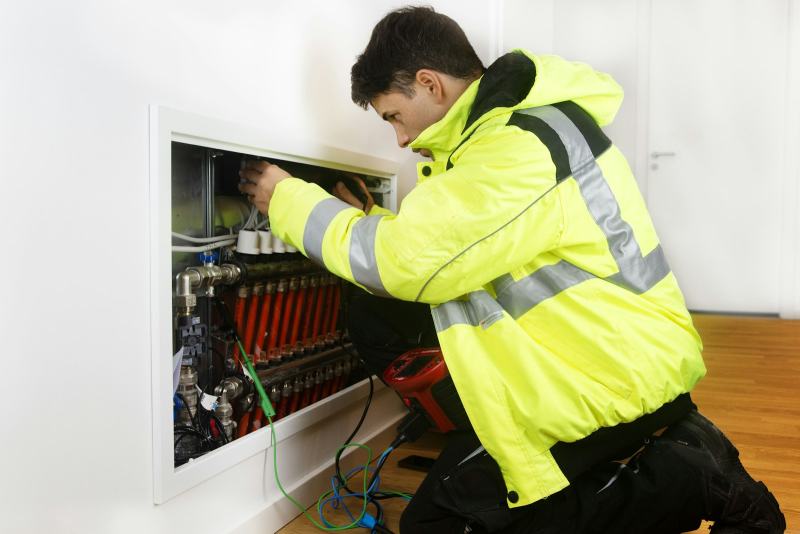
It costs $150 to $600 to replace a condensate pump. Most homeowners pay $200 to $400. The pump itself is $40 to $200. The rest is labor and a service call. It is one of the cheaper HVAC repairs, and it can save you from a costly water leak.
A condensate pump moves water from your AC or high-efficiency furnace to a drain when gravity cannot do it. If the pump fails, the water backs up and spills on the floor or trips a safety switch that shuts the system off. This guide explains the signs, the cost, and the cheap fixes to try first.
What It Costs to Replace a Condensate Pump
A standard swap costs $200 to $400. The tech shuts off the power, disconnects the hoses, mounts a new pump, and tests it. The work takes about an hour.
A mini-split pump or a basic mini-tank is the cheapest. A high-lift pump, which pushes water up many feet, costs more. So does a pump in a hard-to-reach attic or crawlspace.
The table below shows typical ranges. The sections after it explain the pump types and the signs of failure.
Types of Condensate Pumps
A mini-tank pump is the most common. It sits under the air handler and holds a cup or two of water. It costs $40 to $100.
A larger tank pump handles more water, as for a big system or a humid area. It costs $80 to $200. An in-line pump, used on mini-splits, is small and quiet and costs $60 to $150.
Lift height matters. A pump must push water up and out to a drain. Check the pump rating against the height. A pump that is too weak fails to clear the line.
Signs of a Failing Pump
Water around the air handler or the furnace is the clearest sign. A pump that runs and never stops, or one that makes a loud noise, is also a sign. A pump that never runs is the third.
Many systems have a float switch that shuts the AC off when the pan fills. If your AC stops and the pan is full, the pump is the likely cause.
Do not ignore it. Water can stain ceilings, rot subfloors, and grow mold. If the pan overflows, the damage can cost thousands. A bad pump can also be a sign of a clogged line.
Try the Cheap Fixes First
Most pump failures are clogs, not dead motors. Algae and slime build up in the tank and the line. Cleaning the tank with vinegar and flushing the line often fixes it for free.
Check the float switch. A stuck float is a common cause. Lift it by hand and see if the pump starts. If it does, clean the float or replace the switch for $10 to $30.
Check the power. A tripped GFCI or a loose plug can look like a dead pump. If the pump still fails, replace it. Pumps have a life of 3 to 5 years.
Where the Money Goes
The pump is $40 to $200. A new check valve is $5 to $15. Tubing is $5 to $20.
Labor is $100 to $300 for most jobs. A service call fee of $75 to $150 may be extra. A new electrical outlet, if none is near, adds $150 to $350.
A condensate overflow switch is a smart add-on. It shuts the system off before a leak happens and costs $20 to $60. It is worth adding while the tech is on site.
DIY or Hire an HVAC Pro?
A DIYer can swap a pump. Turn off the power at the breaker, disconnect the hoses, and set the new pump in place. Test it with water in the pan before you leave.
Hire a pro if the pump is hard to reach or if the drain line is clogged. A tech can also check why the pump failed. A pump that dies often points to a bigger problem in the coil or the drain.
Related Repairs to Check
A leaking coil or a bad drain pan can look like a pump failure. If water appears on a regular basis, see our guide to an evaporator coil replacement. Dirt in the ducts can also clog a line, so see air duct cleaning.
If your system is also struggling to cool, the cause may be a weak outdoor unit. See our guides to an AC capacitor and an AC condenser.
A pump near a sink or a washer may share a drain. A leaking sink drain is covered in our garbage disposal guide.
How to Keep the Cost Down
Clean the pump once a year. A cup of vinegar poured into the tank kills algae. A pump that runs clean lasts longer.
Buy a good pump the first time. A $40 pump that fails in two years costs more than a $90 pump that lasts five. Ask for a pump with a built-in safety switch.
The Department of Energy AC maintenance tips include steps for keeping the drain clear. A yearly tune-up often catches a weak pump early.
How a Condensate Pump Works
When your AC cools the air, it pulls water out of it. That water drips off the coil into a drain pan. If the pan sits below the drain, gravity cannot carry the water away.
The pump sits in a small tank. When the water rises, a float switch turns on the motor. The motor pushes the water up through a small tube and out to a drain or outside.
A safety switch on the tank can shut off the AC if the water rises too high. This stops the system before an overflow. It is a small part that saves a lot of cleanup.
Where the Water Should Go
The discharge line should run to a floor drain, a laundry sink, or outside. Code in many places bans a discharge into a sink that has no air gap. Check local rules before you pick the spot.
Do not let the line run uphill and then down. A high loop can trap air and stop the flow. Keep the line sloped and kink free.
In winter, a line that runs outside may freeze. Heat pump users should be careful, because a heat pump makes condensate in winter too. A short insulated run helps.
Maintenance Schedule That Works
Check the pump at the start of each cooling season. Pour water into the tank and watch it run. Clean the tank and the float, and rinse the line.
Every few months, add a tablet made for condensate pans. It slows algae and keeps the line clear. A cup of vinegar once a season works too.
Replace the pump every four to five years, even if it still runs. A pump is a low-cost part. The leak it can cause is not.
A Small Fix With Big Savings
A condensate pump is a cheap part. A single overflow can stain a ceiling, ruin carpet, and grow mold. Fixing the pump early costs a few hundred dollars. Fixing the damage can cost thousands.
If your pump is more than four years old, replace it now, and add the safety switch.
Bottom Line
Budget $200 to $400 for a typical condensate pump replacement and up to $600 for a high-lift pump or a hard-to-reach spot. Try cleaning the tank and the float first.
A small pump protects your floors and ceilings. Replace it before it fails, and add a safety switch.
| Item | Low | High | Unit | Notes |
|---|---|---|---|---|
| Mini-tank pump, easy access | $150 | $300 | total | |
| Larger tank or high-lift pump | $250 | $450 | total | |
| In-line mini-split pump | $175 | $400 | total | |
| Hard-access install with new outlet | $400 | $600 | total | Includes electrical hookup |
| Item | Low | High | Unit |
|---|---|---|---|
| Condensate pump | $40 | $200 | total |
| Check valve and tubing | $10 | $35 | total |
| Labor | $100 | $300 | total |
| Overflow safety switch | $20 | $60 | total |
| Service call fee | $75 | $150 | total |
Frequently asked questions
How long does a condensate pump last?
Why is my condensate pump not working?
Can I replace a condensate pump myself?
Do I need a condensate pump?
What is a condensate overflow switch?
Related cost guides
Cost to Replace an AC Condenser
What it costs to replace an AC condenser, when a condenser-only swap makes sense, and why a mismatched coil can ruin t...
Cost to Replace an AC Evaporator Coil
What it costs to replace an AC evaporator coil, how leaks show up, and when a new coil is worth the money.
Cost to Add a Return Air Duct: Price Ranges
What it costs to add a return air duct, why a stuffy room often needs one, and how it differs from adding a supply ven...
Cost to Replace a Furnace Igniter
What it costs to replace a furnace igniter, the symptoms that point to a bad one, and why this cheap part usually mean...